VCL Products > Cybersecurity Suite > Hardware Isolation (Kill Switch) vs Firewall-Only Architecture
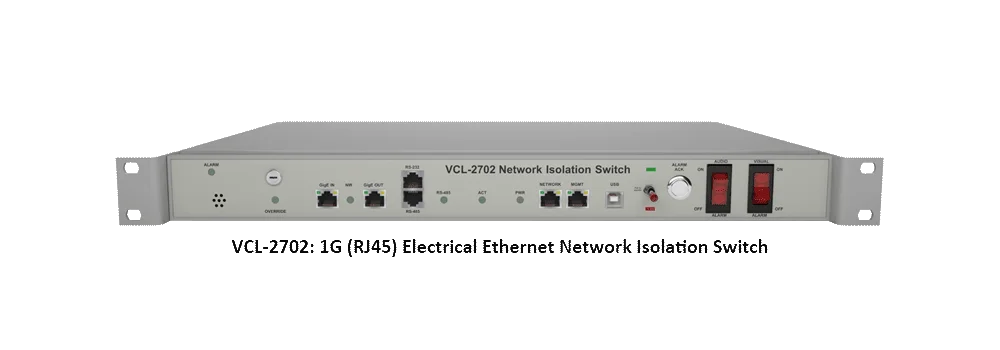
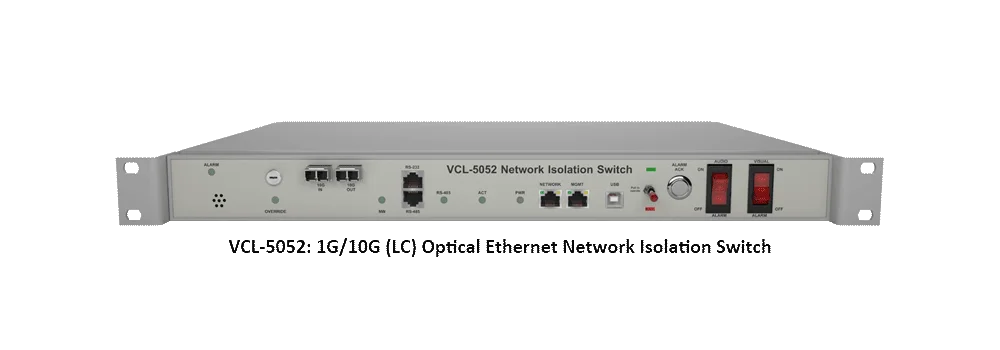
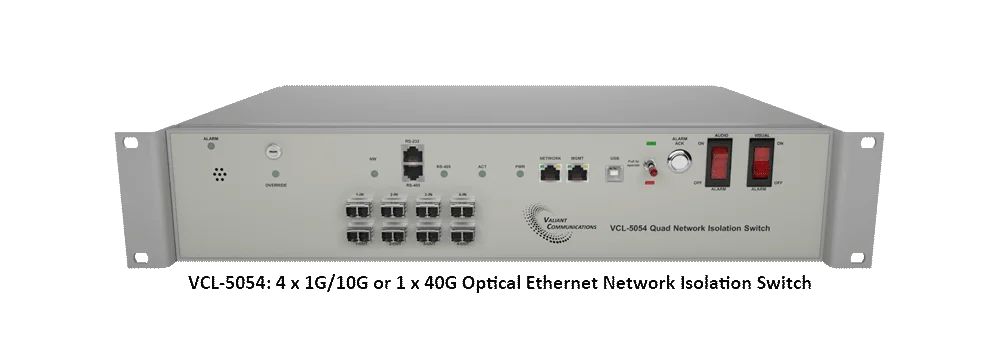
Hardware Isolation (Kill Switch) Switch vs
Firewall-Only Architecture
What is a Network Isolation (Kill Switch) Equipment and why does an organization require it?
The VCL “Network Isolation (Kill Switch) Equipment” provides the last line of defense in the event that a network security breach or unusual network activity is detected. The “Network Isolation (Kill Switch) Equipment” can be used in conjunction with any brand of “Firewalls,” “Network Traffic Sniffers,” and multiple VCL-2143 “Network-MouseTrαp(s)™ / Advanced Honeypot” devices to automatically initiate a series of defensive actions that would have been planned as a counter-defense network policy by the network administrator.
Comparative analysis for Transmission Substations (220kV / 400kV / 765kV / HVDC)
| Criterion | Firewall-Only Architecture | VCL Hardware Network Isolation (Kill Switch) Equipment + Firewall |
|---|---|---|
| Exploit Resistance | Vulnerable to OS/software zero-day exploits, misconfiguration, and FW rule bypass | Physical relay — no software exploitable path. Cannot be remotely compromised |
| Isolation Certainty | Logical isolation (VLAN/ACL/policy) — can be overridden by privileged attacker | Deterministic physical disconnect — 100% guaranteed at hardware layer |
| Fail Behaviour | FW failure may default OPEN (pass traffic) — dangerous in attack scenario | Fail-safe: maintains last configured state (isolated) on power/card failure |
| IEC 62351 / NERC CIP | Partial compliance — logical controls; regulators increasingly require physical controls | Supports full NERC CIP-005/007 physical separation and IEC 62351 zoning |
| Response Speed | Policy evaluation + stateful inspection latency (ms to seconds) | Hardware relay triggers in <50ms — sub-cycle for protection relay systems |
| Audit Trail | FW logs (may be altered if attacker has admin access) | Non-volatile hardware log — tamper-resistant, SNMP trap to NMS |
| OT Protocol Awareness | Requires DPI for Modbus/DNP3/IEC 61850 (complex, license costs) | Protocol-agnostic — isolates any Ethernet segment regardless of protocol |
| Single Point of Failure | Yes — FW compromise = network compromise | No — operates independently; never itself becomes a failure point |